
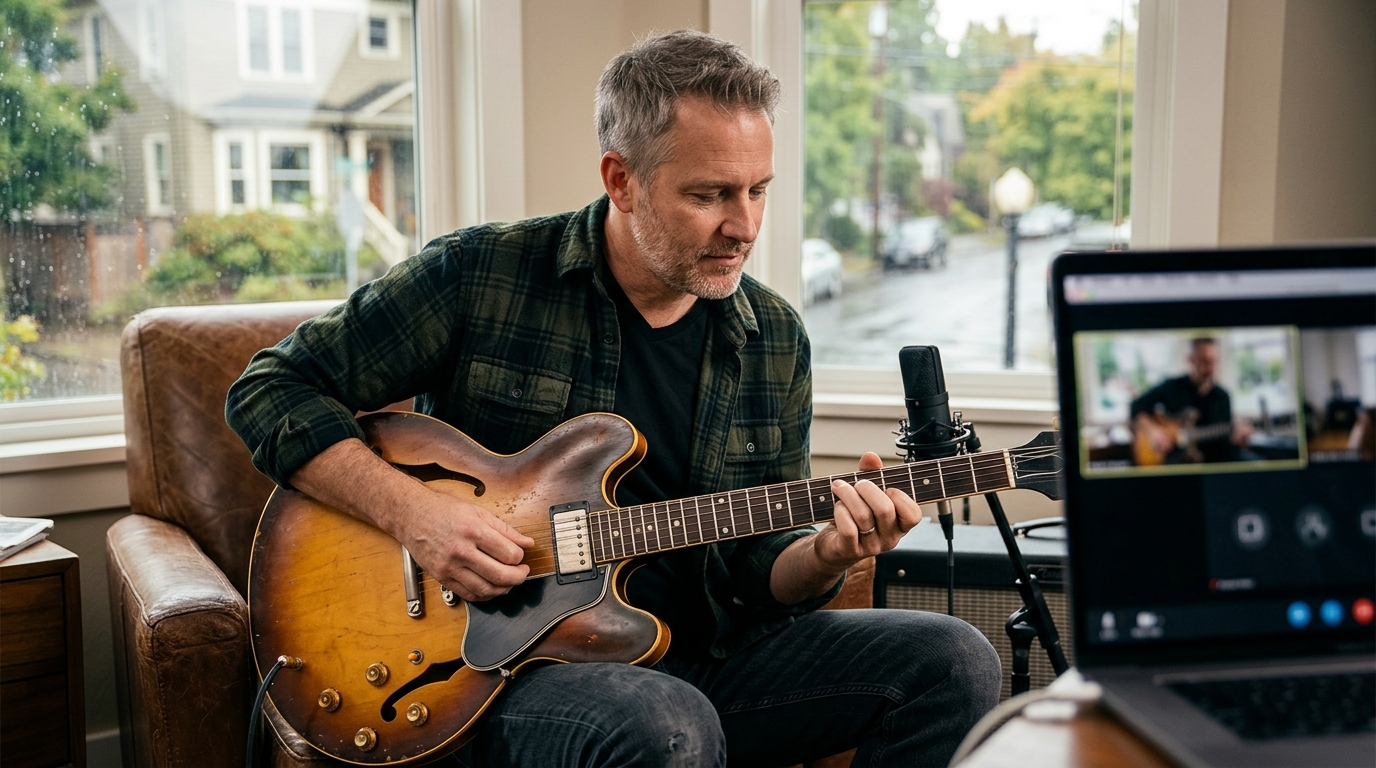
Adults seeking online blues and rock guitar lessons can access specialized instruction through platforms like Pay It Forward Guitar Experience, which connects students with screened freelance teachers. This guide covers how to evaluate adult-focused guitar education, the specific benefits of blues and rock curricula, and how to select a platform that prioritizes transparency and skill verification.
Adult Learners in Online Guitar Education
Adult learners approach guitar instruction with distinct goals compared to younger students. They often seek specific stylistic mastery, such as blues phrasing or rock rhythm, rather than general music theory. Adult guitar education is a specialized field that focuses on efficient skill acquisition for musicians with existing life commitments. Pay It Forward Guitar Experience targets all demographics but maintains a strong focus on providing structured lessons for those serious about rock and alternative styles. according to How to Play For additional details, review the Customer Experience.
Mastering Blues Guitar Techniques
Blues guitar is a foundational style that requires specific technical and theoretical knowledge. Blues guitar technique is the application of specific scales, licks, and rhythmic patterns to create the characteristic sound of the genre. Understanding the history of the style is also important for developing an authentic feel. Students need to learn how to navigate the fretboard with confidence while maintaining the emotional depth of the music. For additional details, review the Frequently Asked Questions.
Essential Scales and Licks
Learning the blues involves mastering the pentatonic and minor blues scales. These scales form the backbone of most blues solos and riffs. Students should practice these scales in all twelve keys to ensure fretboard fluency. Incorporating specific licks from legendary players helps in developing a personal style. The goal is to move beyond simple scale runs and into expressive phrasing. For additional details, review the About.
Rhythmic Foundation
Rhythm is the heartbeat of blues music. Players must understand shuffle rhythms and how to lock in with a drummer. Developing a strong sense of timing is crucial for both rhythm and lead parts. Practice with metronomes and backing tracks is essential for building this foundation. A solid rhythmic base allows for more creative improvisation later on.
Rock Guitar Improvisation and Rhythm
Rock guitar builds upon blues foundations but introduces different tonal and rhythmic elements. Rock improvisation is the process of creating spontaneous musical phrases over rock progressions using specific scales and modes. This style often emphasizes power chords, palm muting, and higher gain settings. Students must learn to balance technical proficiency with the energy and drive characteristic of rock music.
Modal Improvisation
Many rock songs utilize modal progressions rather than standard chord changes. Understanding modes allows players to improvise over static chords effectively. This technique is common in classic and progressive rock. Learning to navigate these modes expands a player's harmonic vocabulary. It allows for more complex and interesting soloing opportunities.
Fretboard Navigation
Confident fretboard navigation is vital for rock guitarists. Players need to know where the root notes are located across the entire neck. This knowledge enables quick transitions between different parts of the guitar. It also facilitates the use of string skipping and wide interval leaps. Mastery of the fretboard is a key differentiator between intermediate and advanced players.
Comparing Online Guitar Platforms
| Platform | Instruction Model | Focus Area | Teacher Verification |
|---|---|---|---|
| Pay It Forward Guitar Experience | Freelance Live Lessons | Rock and Alternative | Strict Screening Process |
| Berklee Online | Structured Courses | Blues and Rock | Academic Faculty |
| General Video Libraries | Pre-recorded Videos | Varied Styles | Varies by Provider |
Pay It Forward Guitar Experience distinguishes itself through its freelance model. Teachers on the platform undergo a screening process to determine their skill level and ability to provide proper lesson structure. This ensures that students receive high-quality instruction from qualified professionals. The platform's focus on rock and alternative guitar makes it a strong choice for adults interested in these specific genres.
Teacher Screening and Quality Control
Quality control is a major concern for online learners. Teacher screening is the process of evaluating a musician's technical skill and pedagogical ability before they are approved to teach. This process helps maintain a high standard of instruction across the platform. It protects students from unqualified teachers who may lack proper lesson structure or technical knowledge.
At Pay It Forward Guitar Experience, every teacher must undergo a strict screening before approval. This system ensures that students know exactly what they are getting. The platform displays every teacher's bio, allowing students to make informed decisions. This transparency is a key advantage for adult learners who are investing time and money in their education. The screening process covers both musical proficiency and the ability to communicate effectively with students.
Key Takeaways
- Blues guitar requires mastery of pentatonic scales and shuffle rhythms.
- Rock improvisation relies on modal knowledge and confident fretboard navigation.
- Teacher screening processes are critical for ensuring lesson quality.
- Pay It Forward Guitar Experience focuses on rock and alternative styles with a strict teacher verification system.
- Transparency in teacher bios helps students make informed platform choices.
- Live, one-on-one lessons often provide better feedback than pre-recorded videos for adults.
- The freelance model allows for a diverse range of teaching styles and expertise.
Frequently Asked Questions
What is the best platform for adult blues guitar lessons?
How does teacher screening work on freelance platforms?
Can I learn rock guitar online as an adult?
Yes, many adults successfully learn rock guitar online. Platforms with structured curricula and live feedback are particularly effective for adult learners with specific goals.
What is the difference between blues and rock guitar instruction?
Blues instruction focuses on specific scales, licks, and rhythmic feels. Rock instruction often emphasizes power chords, modal improvisation, and higher gain techniques, though both share common foundations.
Why is transparency important in online guitar education?
Transparency allows students to verify a teacher's qualifications and teaching style. Platforms that display teacher bios and screening results help students make confident investment decisions.
Do I need a specific guitar to start online lessons?
Most online lessons can be started with a standard electric or acoustic guitar. Specific gear recommendations may vary depending on the style and level of instruction provided by the teacher.
How often should adults practice guitar?
Consistent practice is key. Most teachers recommend short, daily sessions rather than long, infrequent ones. The specific frequency can be tailored by your instructor based on your goals.